Case Study
Westin Cocoa Beach Resort and Spa
Beachfront construction presents some of the most demanding foundation challenges in the industry. Shifting sand, active erosion, and elevated water tables create an environment where structural stability is never guaranteed — and where the margin for error is essentially zero. Salt air accelerates corrosion, storm surge threatens undermining, and the ever-present movement of sand beneath the surface means the ground itself cannot be trusted without intervention. An infrastructure engineering scour assessment can be a critical part of the design, and this project was
Project Overview
American Pools and Spas contracted with Cantsink LLC to install helical
support for a Kast Construction project in Cocoa Beach, Florida. Engineered by Aquatic Engineering Consultants and certified by GB Collins, PA was to provide for stability and engineered and to prevent scour washout.
Building a watertight, heavily loaded pool structure directly on the
beach is, in many ways, analogous to engineering a vessel — one that must
remain perfectly level, perfectly sealed, and structurally sound for decades,
all while being subjected to the constant forces of one of nature's most
dynamic environments. It is a challenge that demands specialized materials,
precise engineering, and an installation team with the experience to adapt when
conditions don't go according to plan.
Scope of Work
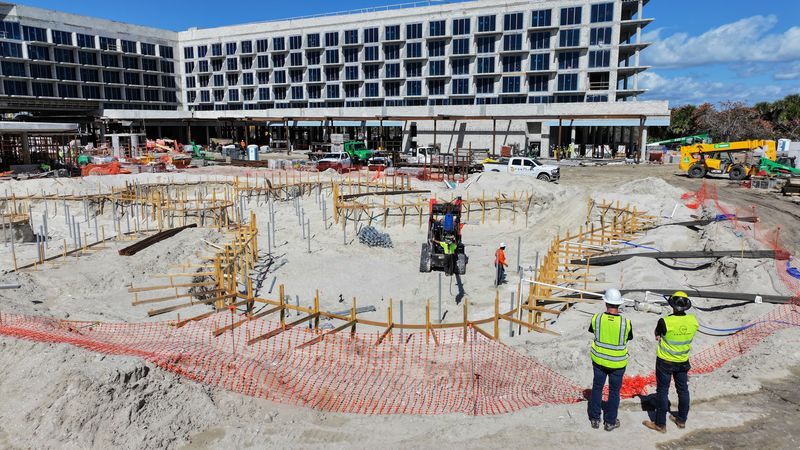
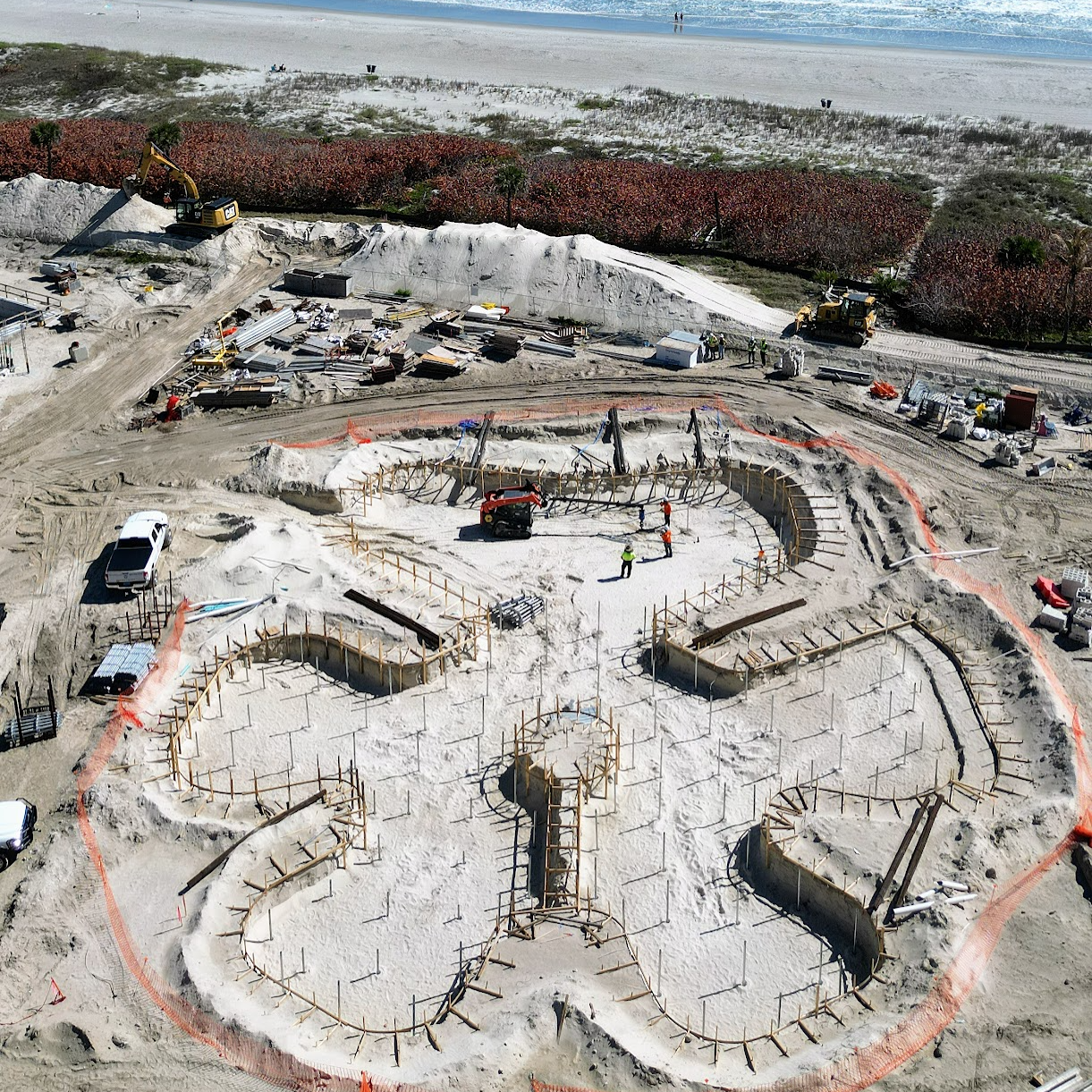
The design called for 149 piles installed in a 10/12/14 triple helix
configuration - a design selected for its ability to distribute load across
multiple bearing plates and achieve the penetration depth necessary to reach
stable soil below the active sand layer. These piles were installed exclusively to support the
structural pool shell and associated load-bearing elements, not the surrounding
pool deck, ensuring precise reinforcement exactly where it was needed.
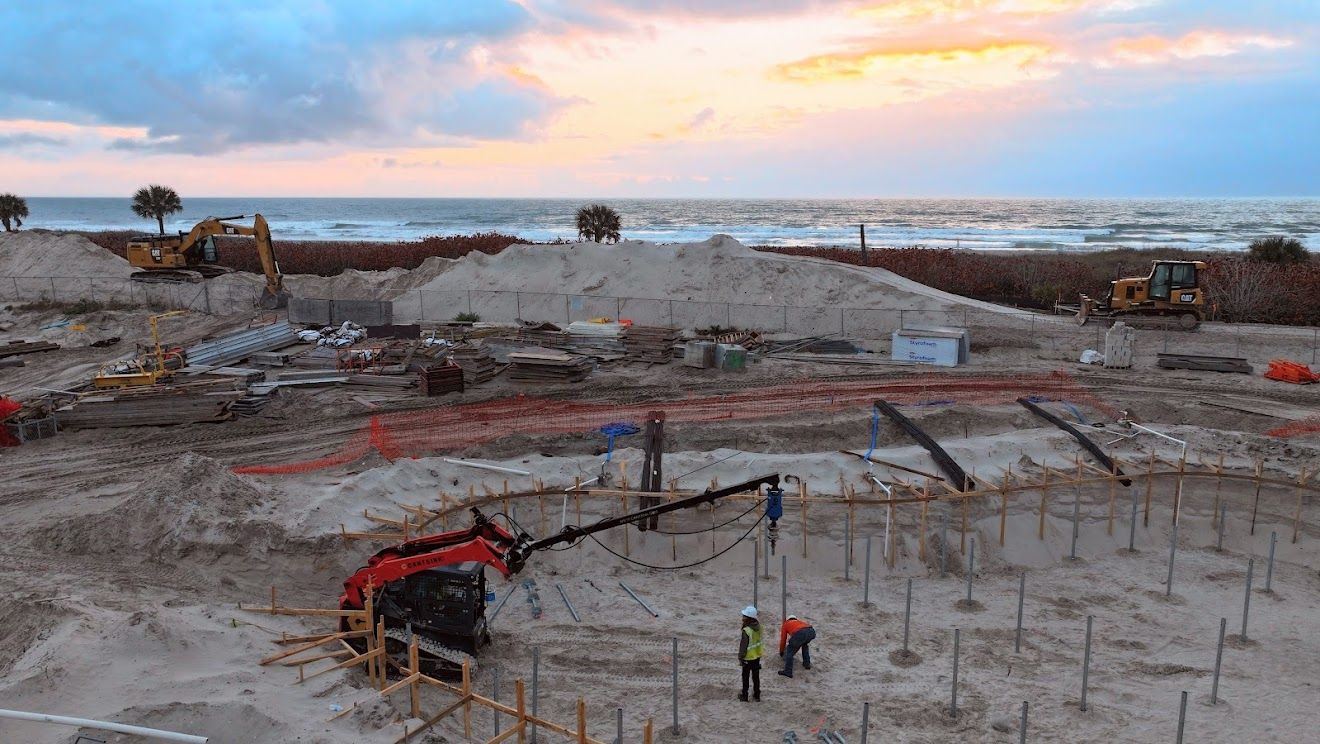
Piles were driven to an average depth of 14 feet below grade, with load
capacities engineered to exceed 30 kips per pile. Following installation, all
piles were cut to elevation and capped to specification, preparing the
foundation for the pool structure above.
The work was not without its challenges. Beachfront subsurface conditions are rarely uniform, and the cutting and capping phase proved to be particularly time intensive. Despite these unforeseen complications, the Cantsink team maintained pace and professionalism throughout - completing the full scope of work, from mobilization to final capping, in under two weeks. The pile installation itself was completed in just four days.
Result
All 149 helical piles achieved the required installation torque and
target depth, confirming that design load capacities were met across the entire
foundation footprint. The project was delivered on schedule, with zero
compromise to the structural requirements outlined by the engineering team.
Upon completion, the general contractor was able to transition immediately into
the next phase of pool and deck construction without delay — a direct result of
the precision and efficiency of the foundation installation.
Conclusion
The Cocoa Beach Westin project is a strong example of how proper engineering, paired with an experienced, adaptable installation crew, can tackle any challenge — no soil condition too unstable, no load requirement too demanding, and no site too difficult to deliver a foundation built to last. Where conventional foundation methods would struggle — or fail entirely — helical piles offer the depth, load capacity, and installation speed that complex, high-value projects demand.