

Blog Post
Foundations & Pool Stabilization in 30A Florida: Building Strong in Coastal Conditions
Posted in Articles
Florida's scenic Highway 30A is known for its stunning beaches, luxury homes, and high-end coastal living. From Rosemary Beach to Seaside and Santa Rosa Beach, properties along 30A are some of the most desirable in the state. However, beneath the beauty lies a critical challenge unstable coastal soil conditions that can compromise foundations and swimming pools.
For homeowners, builders, and developers in 30A, understanding how to properly support structures in this environment is essential. Without the right foundation strategy, issues like settling, cracking, and structural movement can quickly arise.
This guide explores:
Unique soil conditions along 30A
Common foundation and pool problems
Why traditional foundations fail
The role of helical piles in long-term stabilization
Understanding 30A Florida Soil Conditions
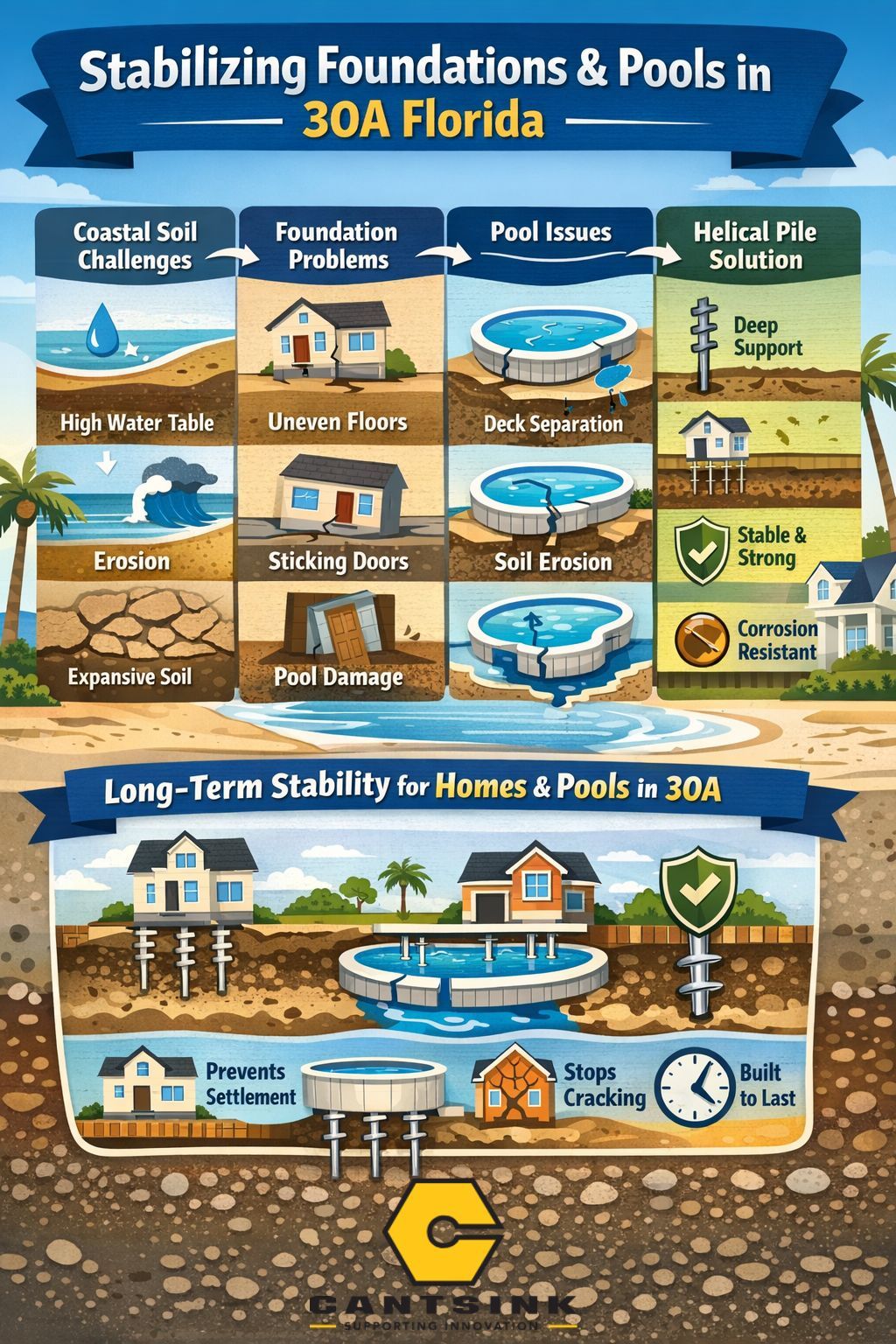
The 30A region sits along Florida's Gulf Coast, where soil composition is dominated by loose sand, high moisture levels, and fluctuating water tables. These conditions create a challenging environment for traditional construction.
Key Soil Challenges
1. Sandy Soil Composition
Much of coastal Florida including 30A is made up of sandy soils that shift easily. While sand drains well, it lacks the density needed to support heavy structures long-term.
2. High Water Table
Proximity to the Gulf means groundwater levels are often high. This can weaken soil stability and increase the risk of erosion beneath foundations and pools.
3. Erosion & Coastal Exposure
Wind, rain, and storm surge constantly reshape the landscape, which can gradually undermine shallow foundations.
4. Expansive Soil Pockets
Some areas include clay layers that expand and contract with moisture changes, adding additional stress to structures.
Why Traditional Foundations Struggle in 30A
Many homes and pools are built on concrete slab foundations, which work well in stable soil but not in shifting coastal environments.
Common Issues with Standard Foundations
Settlement & sinking
Cracked slabs and walls
Uneven floors
Doors and windows sticking
Pool deck separation
These issues occur because traditional foundations rely on shallow soil layers, which are the most unstable in coastal regions.
Florida's soft soils and moisture variations make it difficult for slab foundations to maintain long-term stability without additional support.
Foundation Problems in 30A Homes
In high-end coastal communities like 30A, foundation problems can be especially costly—not just structurally, but financially.
Warning Signs to Watch For
Hairline or widening cracks in walls
Sloping or uneven floors
Gaps between walls and ceilings
Cracks in driveways or pool decks
Water intrusion around the foundation
Even minor signs can indicate deeper structural issues caused by soil movement beneath the home.
Pool Stabilization Challenges in Coastal Florida
Swimming pools in 30A face even greater risks than homes. Unlike houses, pools are:
Heavier (due to water weight)
More rigid (less flexibility than structures)
Highly sensitive to soil movement
Why Pools Are Vulnerable
Pools are typically built with concrete shells that rely on stable soil for support. In coastal environments:
Sandy soil shifts under weight
High water tables reduce load-bearing capacity
Erosion can create voids beneath the pool
This leads to:
Cracking pool shells
Uneven pool decks
Structural separation
Water leaks
Pools in areas like 30A often require deep foundation support to prevent long-term damage.
The Role of Helical Piles in 30A Foundations
To combat these challenges, deep foundation systems—especially helical piles (helical piers)—have become the preferred solution across Florida.
What Are Helical Piles?
Helical piles are steel shafts with spiral plates that are screwed deep into the ground until they reach stable, load-bearing soil layers.
Unlike traditional foundations, they bypass weak surface soils and anchor structures securely below.
Why Helical Piles Are Ideal for 30A
1. Stability in Sandy Soil
Helical piles penetrate loose sand and anchor into deeper, more stable layers, preventing settlement and shifting.
2. Performance in High Water Tables
They are designed to perform in saturated conditions, making them ideal for coastal and waterfront properties.
3. Minimal Site Disruption
Installation requires little excavation, preserving landscaping and minimizing impact on high-end properties.
4. Corrosion Resistance
Modern helical piles are coated to resist corrosion from salt air and moisture—critical in coastal Florida environments.
5. Fast Installation
Helical piles can be installed quickly, often in hours rather than days, keeping projects on schedule.
Pool Stabilization with Helical Piles
For pools in 30A, helical piles provide a proven solution for long-term structural integrity.
How It Works
Piles are installed beneath the pool shell or surrounding deck
Load is transferred to stable soil layers below
The pool structure is supported evenly
Benefits for Pool Projects
Prevents cracking and structural failure
Supports heavy concrete shells
Stabilizes decks and surrounding areas
Reduces risk of costly repairs
Helical piles are specifically engineered to handle heavy loads and unstable soils, making them ideal for pool applications in Florida's coastal zones.
New Construction vs. Repair: Why Planning Matters
New Construction in 30A
For new builds, incorporating helical piles from the start provides:
Long-term stability
Reduced future repair costs
Better performance during storms
Builders across Florida are increasingly using deep foundation systems proactively to avoid issues down the road.
Existing Homes & Pools
For properties already experiencing problems, helical piles can:
Lift and re-level foundations
Stop further settlement
Reinforce structural integrity
They offer a permanent solution, not just a temporary fix.
The Impact of Hurricanes & Coastal Weather
30A properties are regularly exposed to:
Hurricanes
Heavy rain
Storm surge
Coastal erosion
These forces place immense pressure on foundations.
Helical piles help anchor structures deep into the ground, reducing the risk of movement during extreme weather events and improving resilience.
Protecting Your Investment in 30A
Real estate along 30A represents a significant investment. Foundation failure can:
Reduce property value
Lead to costly repairs
Impact safety and livability
By investing in proper foundation support, homeowners can protect both the structural integrity and long-term value of their property.
Why Choose Cantsink for 30A Foundation & Pool Stabilization
Cantsink specializes in advanced helical pile systems designed specifically for Florida's unique soil conditions.
What Sets Cantsink Apart
Patented helical pier technology
Proven success in sandy, moisture-rich soils
Solutions for both homes and pools
Expertise across all Florida regions, including coastal areas
Whether you're building a new home in Seagrove Beach or stabilizing an existing pool in Grayton Beach, Cantsink provides reliable, engineered solutions that last.
Building along 30A offers unmatched beauty—but it also demands smart engineering.
Florida's sandy soils, high water tables, and coastal exposure create a perfect storm for foundation and pool issues. Traditional construction methods often fall short, leading to costly problems over time.
Helical piles provide a modern, proven solution—offering deep, stable support that protects homes and pools from shifting, settling, and structural damage.
If you're planning a build or noticing signs of foundation issues, taking action early is key. With the right approach, you can ensure your 30A property remains strong, stable, and secure for years to come.
Need Help Stabilizing Your 30A Property?
Contact Cantsink today to learn more about helical pile foundations and pool stabilization solutions built for Florida's toughest conditions.

