Case Study
Townhome Underpinning - DeLand, FL
SITUATION
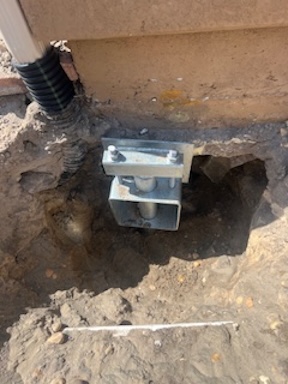
A townhome structure in DeLand, Florida began showing troublesome signs of shifting foundations, to the point that the owners contacted Cantsink representatives for professional advice. The movement appears to be the product of shifting soils caused by years of erosion, which left the existing shallow footing without consistent support. The recommended solution was remedial underpinning: installing helical piles that carry the structure's load past the weakened surface soils and onto deeper, stable bearing strata.
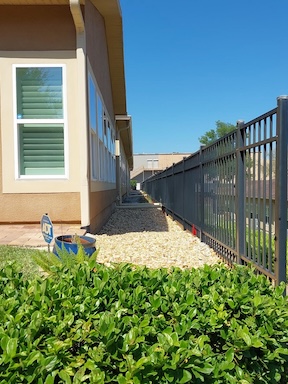
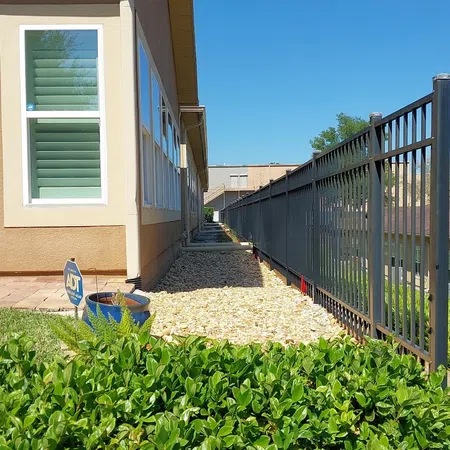
Site access was a major constraint. The rear of the townhomes offered very limited working space, and earlier land leveling and de-mucking of the soil had created a drop-off that required a retaining wall to keep the soil stable. The piles closest to that wall had to be installed in extremely tight conditions.
SCOPE OF WORK
Cantsink LLC was contracted to install helical piles as remedial underpinning along the rear of the townhomes, stabilizing the exterior footing. A total of 29 piles were installed, totaling approximately 522 linear feet, including those in the area closest to the retaining wall, where very limited space required specialized equipment sized for the confined working area.
ANCHOR SYSTEM
The design called for 29 helical piles with a 12"/14" helix configuration, rated for a working load capacity of 32 kips per pile and an ultimate capacity of 64 kips. This design was selected to distribute loads across the exterior footing, providing complete stabilization across the rear of the structure. Because helical piles are mechanically screwed into the ground with compact equipment, they can be installed with low vibration and minimal soil disturbance, an important advantage next to a retaining wall and an already-settled structure.
RESULTS
Piles were driven to an average depth of 18 feet below grade, and all 29 piles reached the required torque and depth, delivering stabilization across the full rear footing at the 32-kip working and 64-kip ultimate design capacity. The work was not without complications: working in a small area required specialized equipment. This project demonstrates that with an experienced team and sound engineering, no site is too challenging and no load too demanding for a properly designed helical pier system.