Case Study
Historic McAfee House Relocation and Foundation Reinforcement in Ball Ground, Georgia
Situation
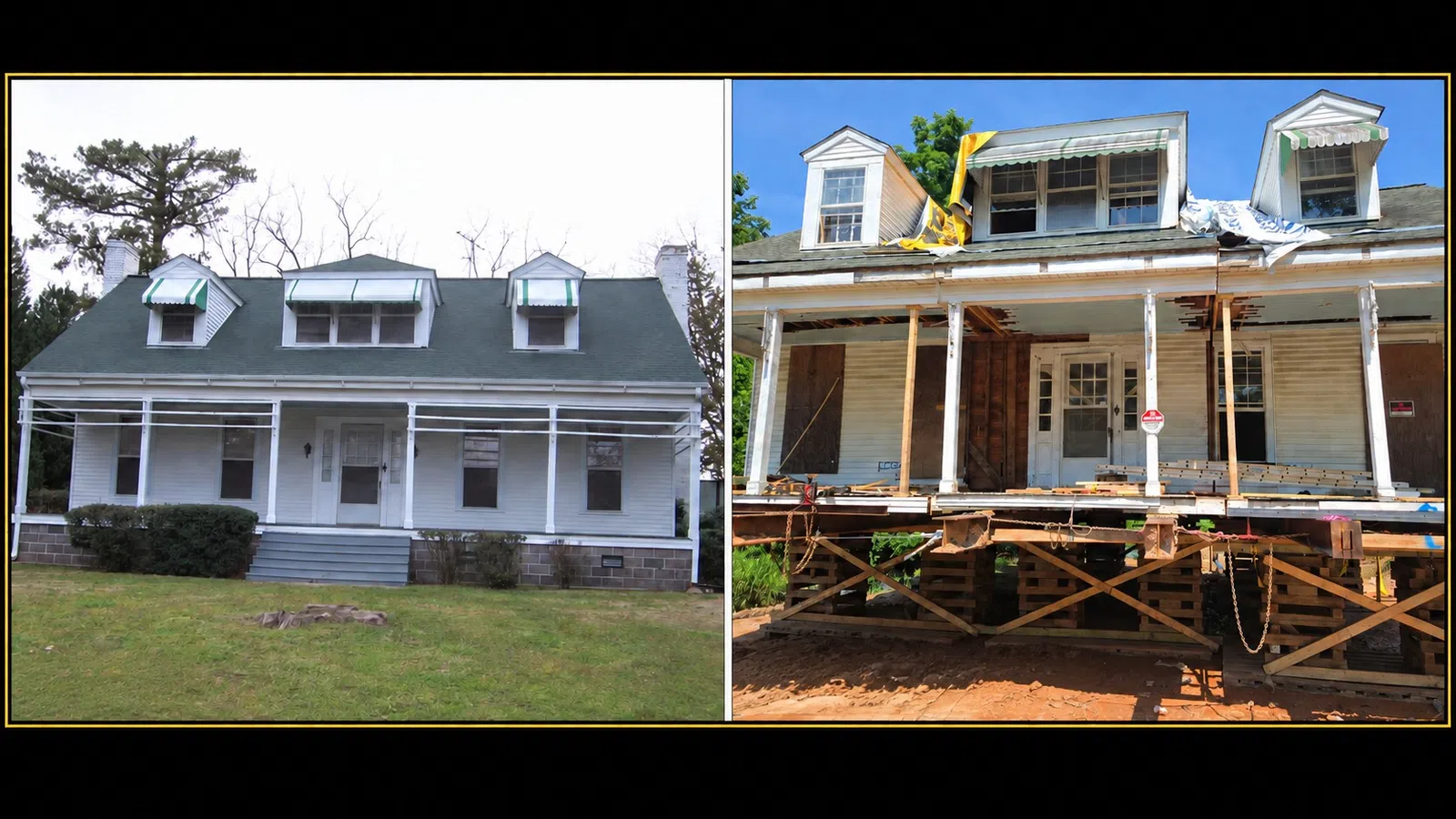
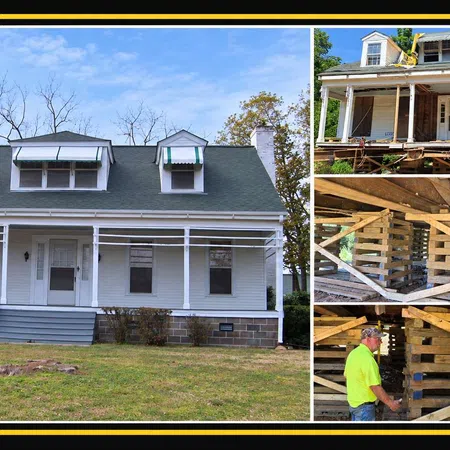
The historic McAfee House, a Civil War-era structure built in the mid-1800s, was relocated from Kennesaw to Ball Ground, Georgia, as part of an effort to preserve and restore the property.
Located near the site of the Battle of Kennesaw Mountain, the 19th-century home retains original timber construction and historically significant architectural elements. Protecting these features during and after the relocation was essential.
Once the house reached its new location, it needed a reliable foundation capable of supporting the historic structure while minimizing vibration, excavation and disruption. Palmer Engineering developed the foundation requirements, and Cantsink was selected to install the helical pile system.
Scope of Work
Cantsink was contracted to install 36 new construction helical piles at the McAfee House's new location in Ball Ground.
The project specifications included:
- Installation date: July 17, 2025
- Number of piles: 36
- Product installed: 2.5-40L03-12
- Total installed footage: 864 linear feet
- Installation duration: One day
- Drive head: Eskridge 5016-21F54
- Installed depths: 21 to 31 feet
- Required working capacity: 25 kips
- Required ultimate capacity: 50 kips
- Engineering: Palmer Engineering
- Installer: Cantsink, LLC
Because the home contained original timber and architectural components, the installation needed to be completed carefully and with minimal impact on the relocated structure.
Anchor System
Cantsink installed 36 of its 2.5-40L03-12 helical piles using an Eskridge 5016-21F54 drive head. Helical piles are installed by rotating steel shafts with helical plates into the soil until they reach the depth and torque required to provide the specified load capacity.
This installation method was well suited for the historic preservation project because it required limited excavation and produced minimal vibration compared with impact-driven foundation systems. Reducing vibration helped protect the home's original materials while providing the deep foundation support required at its new location.
The piles reached depths ranging from 21 to 31 feet, depending on the subsurface conditions at each installation point. In total, Cantsink installed 864 linear feet of helical pile material.
Installation torque was monitored throughout the project to verify that each pile achieved the required capacity. Helical piles can also support loads immediately after installation, allowing subsequent foundation work to proceed without waiting for concrete to cure.
Result
Cantsink successfully installed all 36 helical piles in a single day. Every pile exceeded the required design capacity of 25 kips working load and 50 kips ultimate load.
The completed helical pile system provided dependable, long-term foundation support while minimizing vibration and disturbance around the historic structure. The efficient installation also helped keep the preservation and restoration project on schedule.
The McAfee House project demonstrates how modern helical pile technology can support historic preservation. By combining carefully engineered foundation requirements with an efficient installation process, Cantsink helped provide a stable new foundation for an important piece of Georgia history.