Case Study
Laguna Promise Land Chapel Retreat
SITUATION
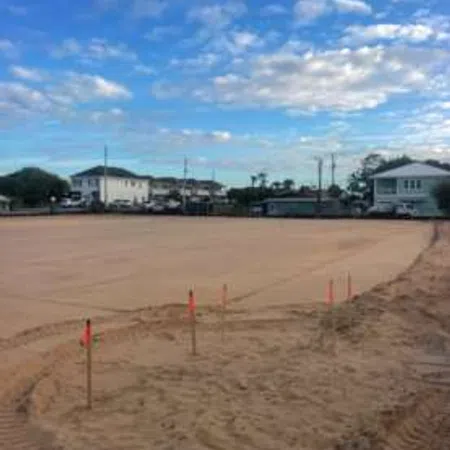
Beachfront construction along the Gulf Coast presents a demanding foundation challenge for any structure type. Shifting sand, active erosion, and a higher-than-average water table make structural stability essential. Because the Laguna Promise Land Chapel retreat sits on coastal sands, the upper soil layers lack the load-bearing capacity to support a 27,000-square-foot concrete and masonry structure. Standard shallow foundations would risk severe shifting or sinking. Helical piers bypass shifting beach sands until they reach deep, stable, load-bearing soils. Once anchored, they transfer the weight of the chapel off the surface sand and onto these deeper layers, anchoring the building securely against lifting or shifting during extreme coastal weather events. Helical piers are screwed into the ground using hydraulic machinery - resulting in low vibration, minimal soil displacement, and a quieter construction process than driven piles.
SCOPE OF WORK
Cantsink LLC was contracted to furnish and install a helical pile foundation system for the Laguna Promise Land Chapel. The anchor system was designed to resist three primary failure modes associated with beachfront construction:
· Shifting / sinking - from insufficient bearing capacity in loose, unstable coastal sand
· Lifting / uplift - from high water tables and storm surge forces acting on the structure
· Vibration / site disturbance - from conventional pile-driving methods incompatible with the retreat's quiet setting and surrounding sand
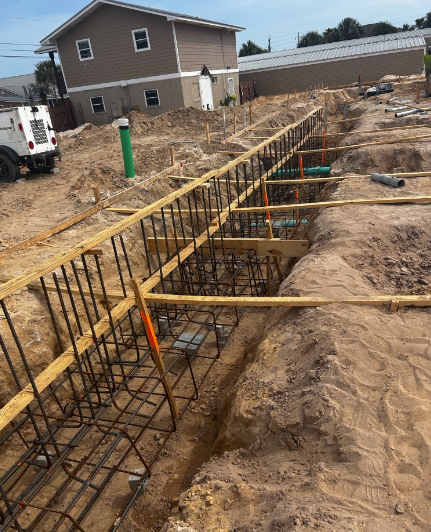
Because the piles are screwed into the earth rather than relying on poured concrete piers, which can be compromised by groundwater or cave-ins during drilling, they were installed cleanly in water-logged soils without curing delays, transferring the chapel's weight off the unstable surface layer and onto the deep-set steel anchors. Florida's coastal high-hazard building codes are among the strictest in the nation, and Cantsink's products carry ICC-ES (International Code Council Evaluation Service) certification, confirming the piles can withstand the high winds, structural tension, and lateral loads associated with Gulf Coast hurricanes. Once the piles reached their target depths and met the engineered torque requirements, they were capped with specialized new-construction brackets — heavy steel brackets embedded directly into the concrete grade beams poured by the masonry team, creating a seamless, rigid link between the deep earth and the chapel's building envelope.
ANCHOR SYSTEM
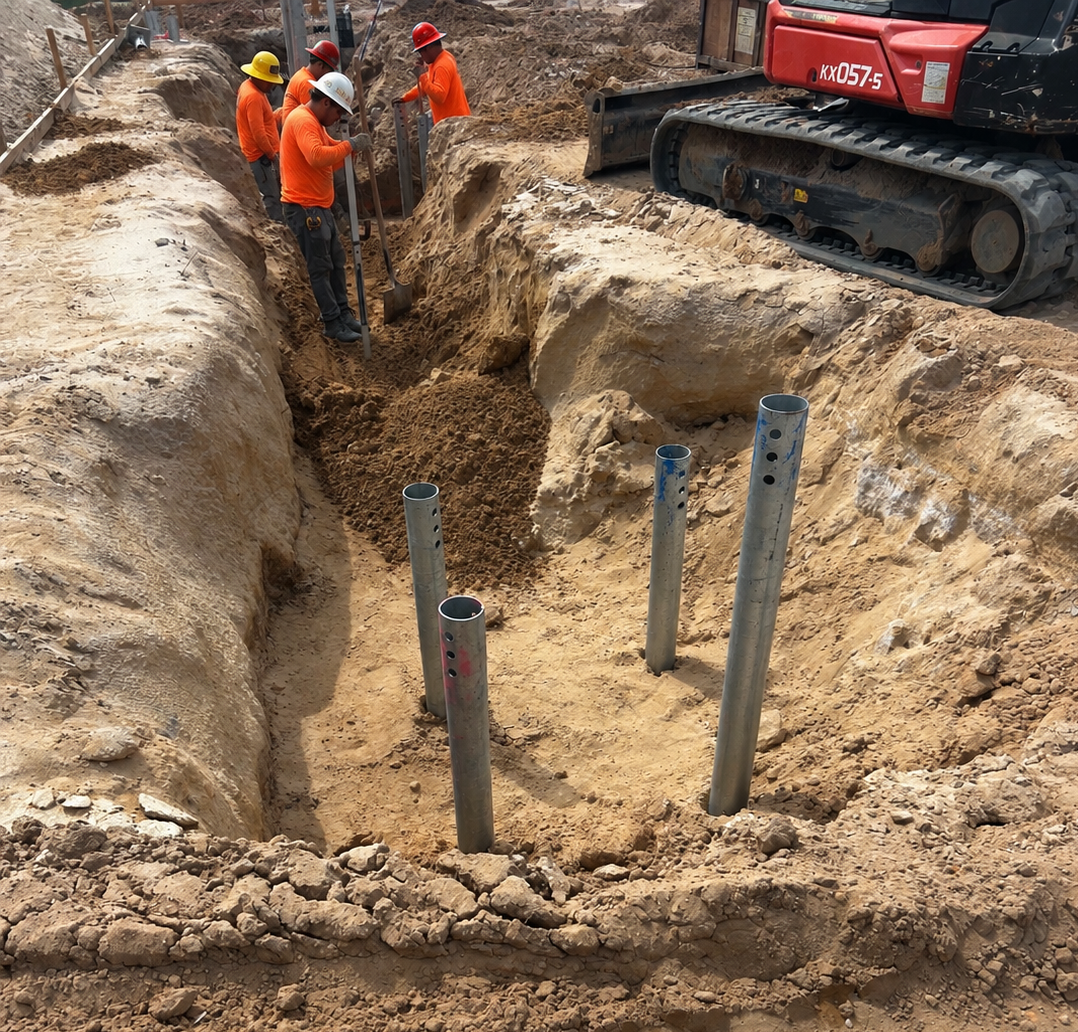
The engineered design specified 179 helical piles, 4" schedule 40, in a 10"/12"/14" helix configuration, rated for a working load capacity of 55 kips per pile and an ultimate capacity of 110 kips. Tension capacity was rated at 40 kips per pile, with an ultimate capacity of 80 kips. This configuration was selected to distribute structural loads across multiple grade beams, providing reliable support for the chapel and its associated load-bearing elements.
RESULT
Helical piles were driven to an average depth of 49 feet below grade, with each pile achieving the required installation torque and target depth as specified by the engineering design. Following installation, the piles were cut to the correct elevation and capped per specification, completing preparation for the chapel's foundation. The project was not without its challenges. Crews worked in salt-air conditions along the Gulf Coast in temperatures exceeding 98°F, in footers ranging from 5 to 9 feet deep, with no wind to ease the conditions. Despite these demanding field conditions, all piles reached the required torque and depth. This project underscores a core principle of coastal foundation work: with an experienced team and sound engineering, no site is too challenging and no load too demanding for a properly designed helical pier system.