Case Study
Tension Loading for Aggregate Piers-Richmond, VA
Situation
Scope of Work
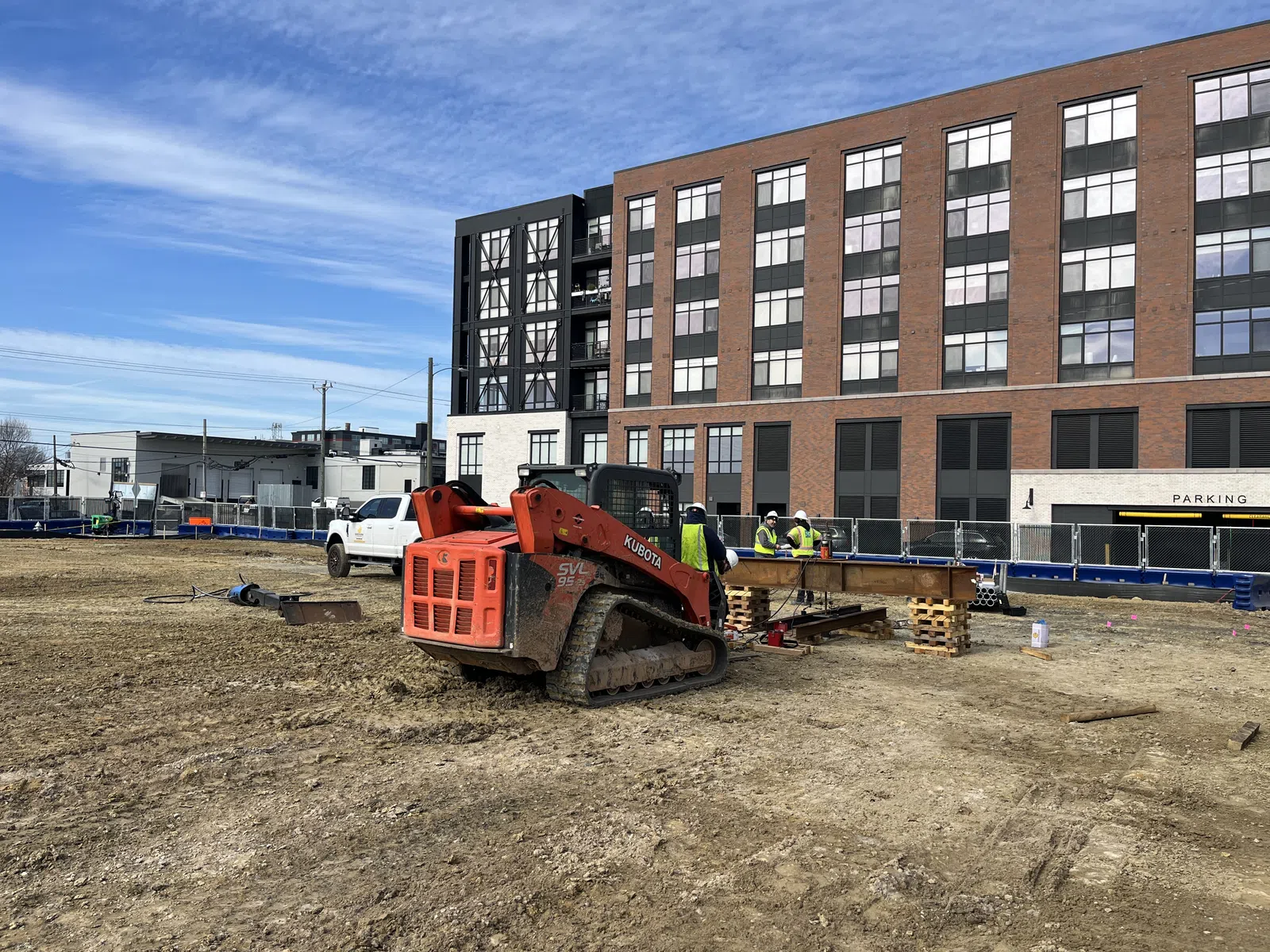
Cantsink was hired to design a deep foundation system capable of providing tension loading at each of the four pile caps. The design tension loading per pile cap ranged from 150 to 204 Kips depending upon the specific pile cap. The pile caps measured either 13'6" x 13'6", 14' x 14' and 14'6" x 14'6" and included 8 rammed aggregate piers in the smaller footings and 9 in the larger footing. The challenge involved placement of the required number of helical piles in each pile cap to effectively achieve the required load capacity. To complicate matters even more, the soil conditions had to be closely evaluated to meet the minimum depth and torque for the anchoring system.
Anchor System
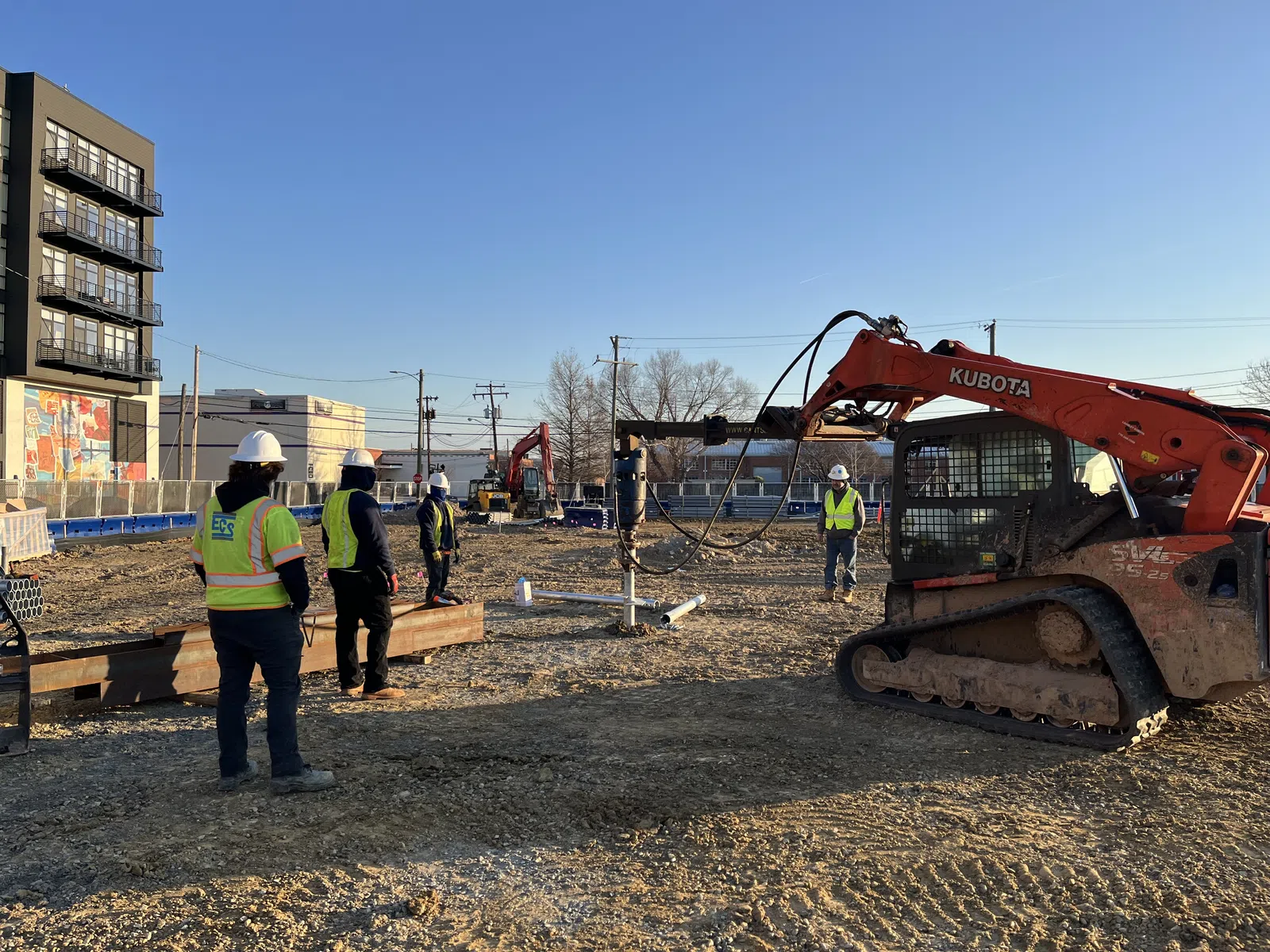
The 4.5" OD sch 40 galvanized piles by Cantsink were used with a triple 10/12/14" helix configuration. Based on the soil borings, there was a dense layer around 25' to 28', where it was believed that sufficient tension loading could be applied. To install, a 20K drive head was used to produce the needed torque for advancement of the anchors. It was determined to install the tension anchors prior to the rammed aggregate piers to avoid disturbance of the soil. Additionally, it is believed that the ground improvement of the rammed aggregate piers would also strengthen the resistance for each Cantsink helical anchor.
Design Load
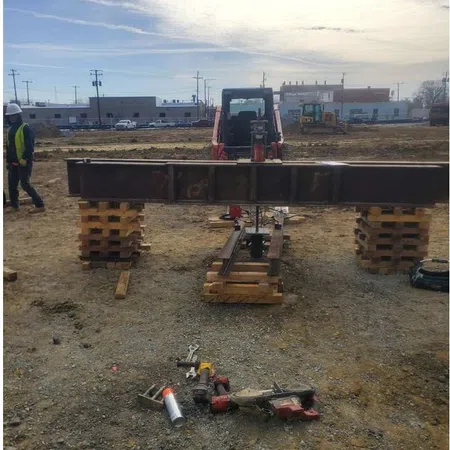
Considering a design load of 37.5 Kips per anchor, Cantsink's Engineering team was able to incorporate 4 anchors for the small pile cap and 6 anchors for the larger pile caps so as not to impact the installation of the rammed aggregate piers that would follow afterwards. A tension load test per ASTM D3689 was included in the design specs and implemented prior to the production anchors. The test anchor reached an embedment depth of 26.5' with a torque of 15,616 ft-lb. at 26' and then dropped to 12,986 at 26.5'. Our decision to test the anchor at this point was based on the helices being embedded in or just below the dense soils confirmed to exist based on the torque achieved along with the data from the soil borings. The total net deflection achieved at the 37.5 Kip design load was 0.354 inches. This information was provided to the General Contractor, and permission was granted to proceed with the production anchors.
Soil Type
Result