Case Study
Underpinning Reinforcement for Footing and Walls
SITUATION
Lotus Engineering and Construction, Inc. designed the repair for an existing home's concrete footing and masonry walls. The repair targeted two adjoining wall sections where differential settlement had compromised the structure's performance. The design accounted for wall openings, which concentrate stress and interrupt the continuity of the masonry. It also addressed the corner geometry where the two wall sections meet, since corners are typically stiffer and attract load differently than straight wall runs. Finally, it considered load transfer through the existing footing, which had to be checked for its ability to carry concentrated pile reactions without distress.
SCOPE OF WORK
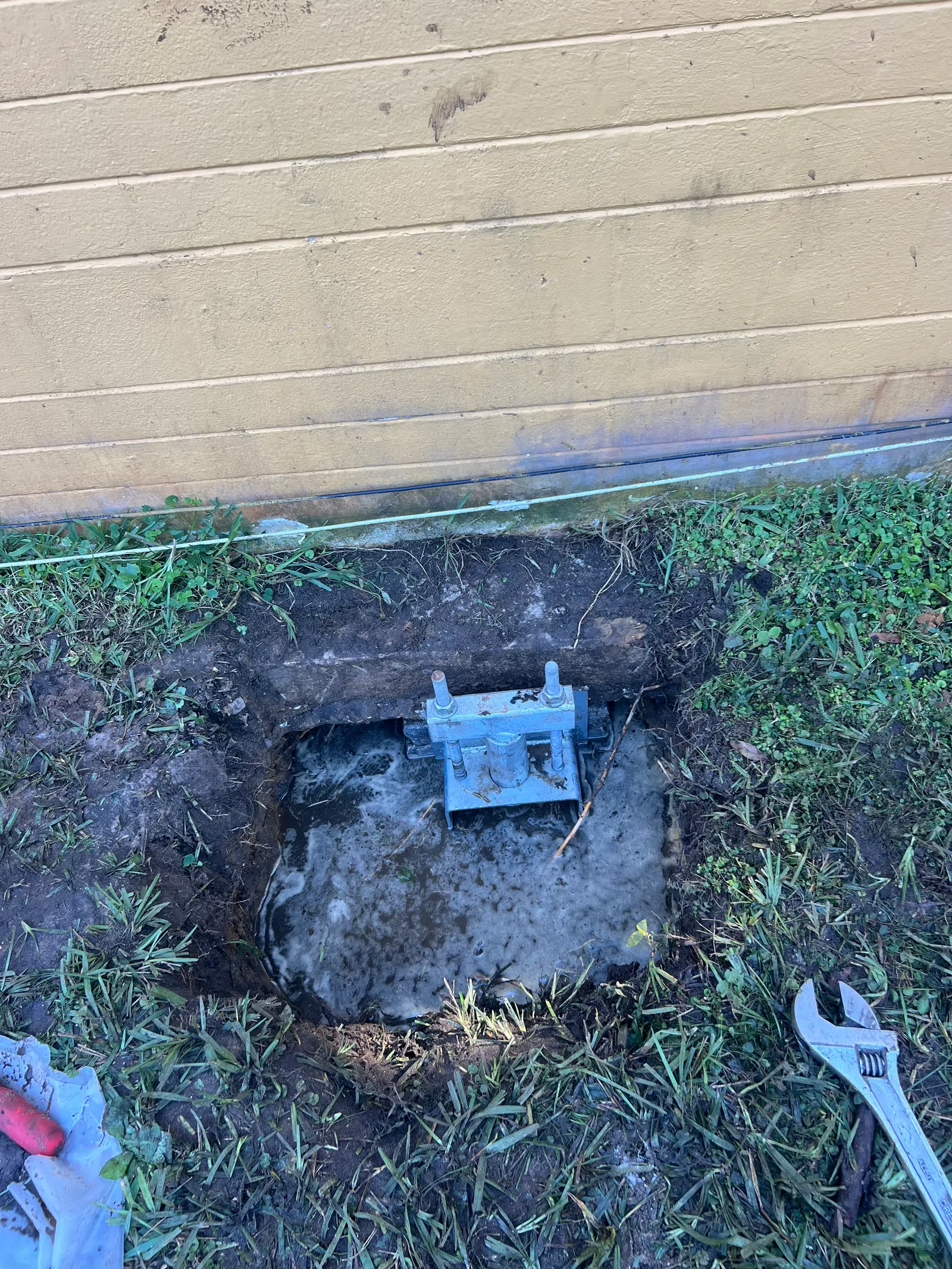
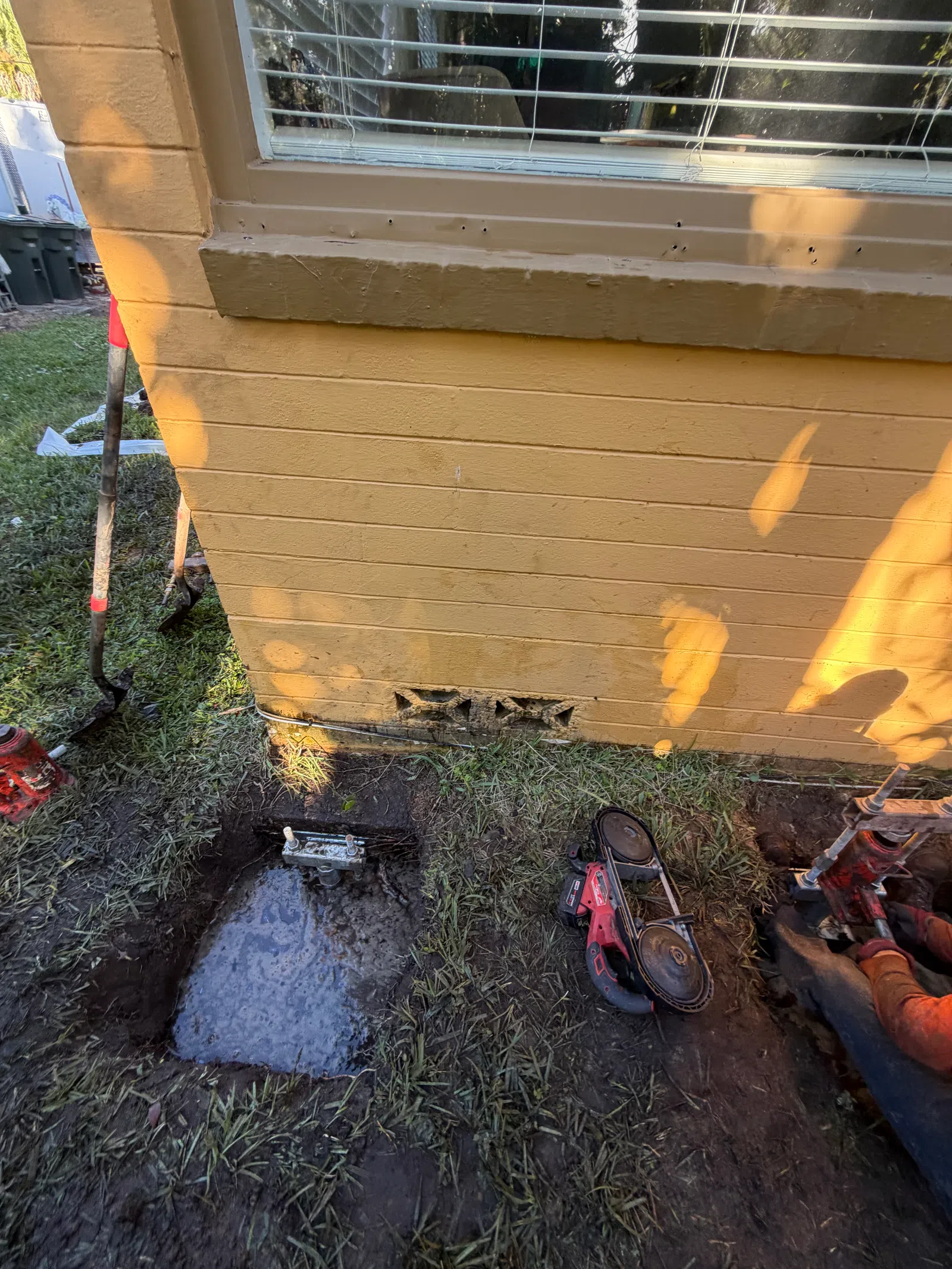
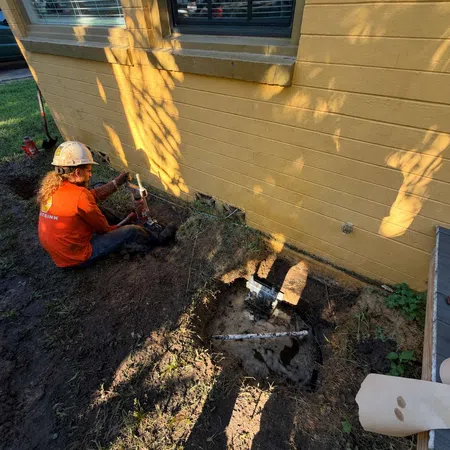
Cantsink used four 2-7/8-inch outside-diameter round-shaft helical pileswith a single 14-inch helix, as identified in the engineer's verificationletter. The piles provided targeted underpinning support at the designatedrepair areas. The work provided support only; no lifting was performed.Thefour specified minimum torques were 1,481, 2,360, 1,813 and 1,858 ft-lb.
Piles 1 through 3 reached 14 feet; pile 4 reached 21 feet, for 63 total linearfeet. Final logged torque readings were 5,245, 5,212, 5,316 and 5,345 ft-lb,respectively. All four exceeded their specified minimums. The crewrecorded torque at successive 7-foot installation increments.
ANCHOR SYSTEM
Cantsink used four 2-7/8-inch outside-diameter round-shaft helical piles with a single 14-inch helix, as identified in the engineer's verification letter. The piles provided targeted underpinning support at the designatedrepair areas. The work provided support only; no lifting was performed. The four specified minimum torques were 1,481, 2,360, 1,813 and 1,858 ft-lb. Piles 1 through 3 reached 14 feet; pile 4 reached 21 feet, for 63 total linear feet. Final logged torque readings were 5,245, 5,212, 5,316 and 5,345 ft-lb,respectively. All four exceeded their specified minimums. The crew recorded torque at successive 7-foot installation increments.
RESULT
The four-pile installation provided support at the designated repair areas without lifting the structure. All four logged final torque readings exceeded the location-specific minimums. Moncef Souissi, Ph.D., P.E., also confirmed achievement of the required installation torques.